
Understanding Voter Fraud Concerns and How to Ensure Your Vote Counts
As Americans prepared to head to the polls concerns about voter fraud, election security, and the integrity of our voting system are once again receiving considerable attention. Elections are fundamental to our democracy, and every eligible citizen should have confidence that their vote will be properly cast, securely counted, and accurately reported.
Regardless of political affiliation, or which candidates someone supports protecting the integrity of an election should be a shared responsibility. However, it is Equi important to distinguish between legitimate security concerns, isolated instances of misconduct, administrative errors, and substantial claims of widespread fraud.
The question is not simply whether voter fraud is possible. It is, whether we are taking reasonable steps to prevent it, identify it, and protect every eligible citizens right to vote.
Voter fraud can take several forms. These include individual individuals attempting to vote more than once, voting in someone else’s name, submitting fraudulent, ballots, tampering with ballots, or interfering with the election process.
There are also concerns involving voter registration records, unauthorized access to election systems, ballot handling, and the security of the technology used to conduct election elections.
Another significant concern is misinformation. False reports about pulling locations, voting, deadlines, eligibility requirements, or alleged election misconduct can discourage people from voting or cause eligible voters to miss their opportunity.
It is important to recognize that an irregularity does not automatically established fraud. A clerical mistake, a delayed ballot count, or a discrepancy in preliminary results may have an ordinary administrative explanation. Allegation should be investigated, using verifiable evidence rather than assumptions, political rhetoric, or information circulating on social media.
Election security is not just about preventing someone from casting an illegal ballot. It is also about enduring that legitimate voters are not improperly prevented from exercising their constitutional rights.
Election security involves multiple safeguards designed to protect the voting process. Voter registration systems help by establish eligibility and maintain accurate voter records. Paul workers verify voters according to applicable state, identification, and registration requirements. Ballot procedures, established accountability for ballots from issuance through counting. Many jurisdictions use paper, ballots, or voting systems that produce a voter verifiable paper record these records provide an independent way to verify election results through audits and recounts when necessary.
Election officials also use access control controls, physical security, cyber security, protections, testing, and procedures designed to maintain the integrity of voting equipment and election data.
No security system is perfect. However, multiple independent safeguards make it more difficult for an individual or group to compromise an election without detection.
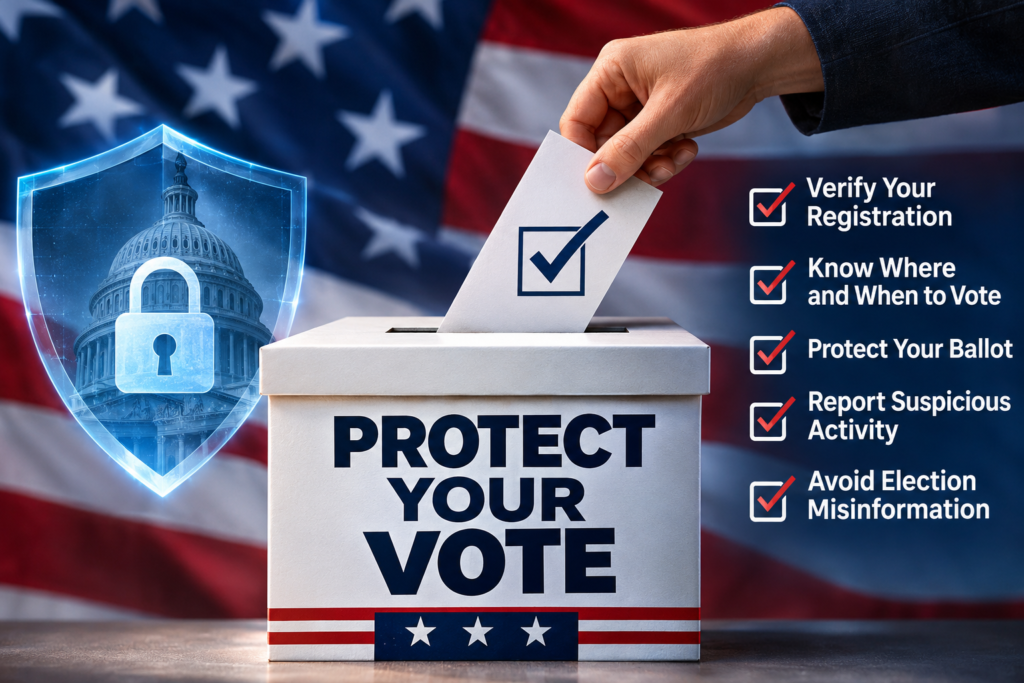
While election officials have significant responsibilities, individual voters can take steps to protect their ballots and help ensure their votes are counted.
1. Verify your voter registration. Before heading to the polls check your voter registration status through your states official election website. Confirm your name, address, and registration information are correct. If you have recently moved, do not assume your previous location is still valid.
2. Know where and when to vote. Obtain your following location in voting hours directly from your county or state election office. Do not rely exclusively on the information shared through Facebook, X, text messages, or other social media platforms. False information about pulling locations, election dates, and voting requirements can be used to discourage or prevent eligible citizens from voting. The FBI specifically warns voters about these tactics.
3. Follow your ballot through the process. If you vote by mail, follow your states procedures for turning your ballot, and use the official ballot tracking system, if available. Confirm that your ballot was received and accepted. If there is a problem, contact your election office immediately to order what steps are available to correct it.
4. Review your ballot before submitting it. Whether voting electronically or using a paper ballot, take your time. Review your selections before casting your ballot. If using a voting machine that prints, a paper record, verify the printed selections accurately reflect your choices. If something appears incorrect, notify a coworker before completing the voting process.
5. Be alert to suspicious activity. Pay attention to unusual activity that could interfere with the voting process. Examples might include somewhat attempting to vote multiple times, tampering with ballots, impersonating, election officials, or threatening or intimidating voters. However, remember that unfamiliar behavior or an administrative procedure you do not understand does not necessarily indicate wrongdoing. Do not interfere with election workers or confront individuals yourself if you observe something concerning, document what you personally witnessed and reported to the appropriate election officials.
6. Protect yourself from election misinformation. Artificial intelligence has made it easier than ever to create convincing photographs, videos, audio, recordings, and messages that appear authentic. A fabricated recording of an election official or a misleading video showing alleged ballot tampering can spread rapidly before anyone has the opportunity to verify its authenticity. Before sharing election related information, verify it source. Look for confirmation from election authorities or reputable news organizations. Do not allow an alarming headline or viral social media post to substitute for evidence.
7. Report suspected action crimes. If you witnessed what you believe is in an actual election crime, reported. The FBI investigates, federal, election offenses, including voter intimidation, fraudulent voting, ballot, tampering, and intentional deception about voting procedures. Information can be submitted through the FBI’s official website at fbi.gov or the Internet Crime Complaint Center at ic3.gov. Provide specific details, dates, locations, and supporting documentation when available.
Protect protecting our elections does not end when the polls close. Counting ballots takes time, particularly when election officials must verify signatures, process legally submitted, male ballots, resolved discrepancies, and conduct required audits. In fact, post-election audits are an important safeguard. According to the national conference of legislature, all 50 states in Washington DC, conduct some form of postal action audit. These procedures help verify that voting systems actually recorded and counted ballots.
We should resist the temptation to declare an election fraudulent simply because the results are not immediately available or because I prefer preferred candidate did not win. At the same time, legitimate evidence, or misconduct should never be ignored. Accountability requires investigating credible allegations, regardless of which political party might benefit.
As a Former FBI special agent, I have spent much of my career, investigating threats, identifying vulnerabilities, and recognizing the importance of verifying the information before drawing conclusions. The same principles applied to protecting our elections
Security requires preparation, awareness, accountability, and a willingness to report suspicious activity. It also requires distinguishing facts from speculation.
Exercise your right to vote. Make sure your registration is current, nowhere to go, protect your ballot, and rely on verified information. If you see something genuinely suspicious, reported through the proper channels.
Our democracy depends on more than people we act. It depends on the integrity of the process that allows us to elect them. Protecting that process is not the responsibility of one political party, one governmental agency, or one group of election officials. Is the responsibility shared by all of us.
Your vote matters. Take the steps necessary to protect it.