
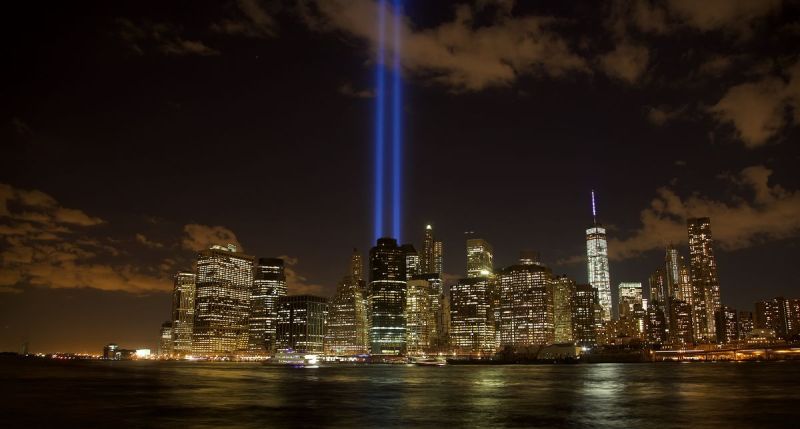
Every September 11, we pause to remember where we were and what we were doing when our nation was attacked. We remember the nearly 3,000 innocent people who never returned home that morning. We remember the firefighters, police officers, emergency medical personnel, military members, airline crews, and ordinary citizens who demonstrated extraordinary courage. And we remember a nation that, for a brief moment, put aside its differences and stood together.
But an anniversary should be more than a remembrance. It should also be an opportunity to ask an important question: What have we learned, and are we applying those lessons today?
The attacks of September 11, 2001, exposed weaknesses that extended well beyond airport security. The 9/11 Commission found significant problems with intelligence sharing, communication between agencies, aviation security, emergency response, and the ability to recognize how seemingly unrelated pieces of information could fit together.
Perhaps the most important lesson was that threats rarely announce themselves in a way that makes them obvious. Information may exist in different places, held by different people or organizations. The challenge is recognizing its significance and making sure the right people receive it.
Before 9/11, government agencies often operated within their own organizational boundaries. Information that might have been useful to another agency was not always shared. The Commission specifically identified the need to move from a culture of “need to know” toward one in which relevant information could be appropriately shared.
That lesson applies far beyond terrorism.
Today, threats can come from many directions—terrorism, targeted violence, cybercrime, workplace violence, organized crime, natural disasters, and individuals whose behavior may indicate that something is wrong. No single organization can identify or prevent every threat by itself.
Security is therefore a shared responsibility.
Another important lesson from 9/11 is the importance of preparation. The attacks demonstrated that emergency plans cannot simply sit in a binder on a shelf. People need to know what to do before an emergency occurs. Communication systems need to be tested. Evacuation routes need to be understood. Employees need to know who is responsible for making decisions. Police, fire, emergency medical services, private security, businesses, and government agencies need opportunities to work together before a crisis—not for the first time during one.
For individuals, preparedness does not have to be complicated.
When you enter a building, take a moment to notice where the exits are. Don’t assume the door you entered through will be the door you use to leave. If you are attending a large event, become familiar with the environment around you. Pay attention to unusual behavior or circumstances, and don’t dismiss something simply because you assume someone else will report it.
If you see something genuinely suspicious, say something—but do so responsibly. Suspicious behavior is not the same thing as suspicious appearance. Focus on conduct, circumstances, and specific facts rather than assumptions about someone’s race, religion, ethnicity, clothing, or background.
We should also understand that technology has changed the security landscape dramatically since 2001. Cybersecurity is now inseparable from physical security. A criminal may not need to enter a building to compromise an organization. A cyberattack can disrupt operations, expose sensitive information, manipulate systems, or create physical consequences. Security professionals therefore have to think beyond fences, locks, guards, and cameras. Today’s security requires an integrated approach involving people, technology, intelligence, and preparedness.
Perhaps the greatest lesson of 9/11, however, is that complacency is the enemy of preparedness.
We cannot live our lives believing that every unusual event represents an impending attack. Fear is not security. At the same time, we cannot assume that because something has not happened recently, it cannot happen.
The goal is neither fear nor paranoia. It is awareness.
Look around. Know your surroundings. Have a plan. Know how to communicate with your family, coworkers, and employees during an emergency. Follow the instructions of legitimate emergency personnel. Maintain basic emergency supplies. Businesses should regularly review their emergency action plans and conduct exercises that test how people actually respond under pressure.
And perhaps most importantly, build relationships before you need them.
Police departments should know the businesses and organizations in their communities. Businesses should know their local law enforcement and emergency management contacts. Security professionals should communicate with one another. Employees should feel comfortable reporting legitimate concerns. Information should move across organizational boundaries when appropriate.
Twenty-five years after September 11, 2001, our security environment is very different. We have learned that intelligence must be shared, security must be layered, emergency response must be coordinated, and preparedness must be continuous. The 9/11 Commission emphasized that no security system can provide perfect safety; effective defenses instead make attacks more difficult, improve our ability to detect threats, and help limit casualties when prevention fails.
We should never forget those who lost their lives on September 11.
But remembering them also means learning from what happened.
The best tribute we can provide is not simply to look backward once a year. It is to take the lessons of that day and apply them every day—to our homes, our workplaces, our schools, our communities, and our country.
Remember. Learn. Prepare. Stay aware. And never assume that someone else is responsible for your safety.
Because the greatest lesson of September 11 may be the simplest one:
Preparedness saves lives.