
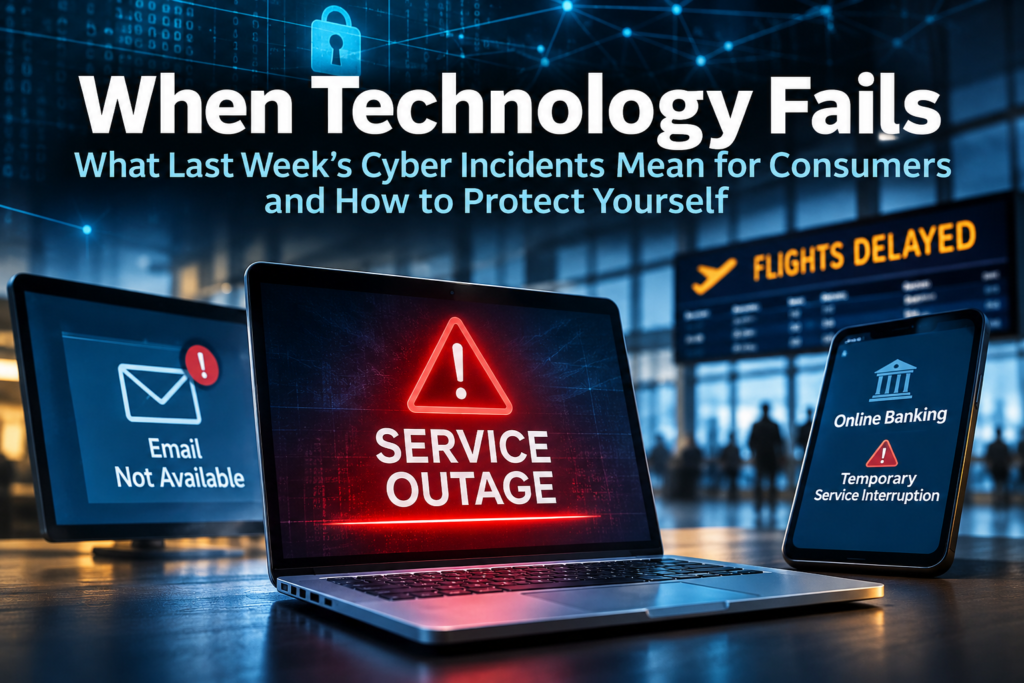
Over the past week, Americans have been reminded just how dependent our daily lives have become on technology. Email systems stopped working, airline operations were disrupted, banking services experienced interruptions, and cybercriminals gained access to information held by companies that millions of consumers trust.
For many people, the immediate reaction was to wonder whether we were witnessing a coordinated cyberattack against the United States. While the incidents occurred close together, there is an important distinction: several major disruptions were caused by technical failures rather than hackers. However, separate cybersecurity incidents did involve criminals exploiting vulnerabilities and compromising information.
Understanding what happened provides an important lesson for all of us: our personal information and daily activities are only as secure as the technology and organizations we depend upon.
What Happened Over the Past Week?
1. Microsoft Outlook and Microsoft 365 Disruption
One of the most significant disruptions involved Microsoft 365, including Outlook, Teams, OneDrive and other commonly used services. Millions of people and businesses across more than 70 countries experienced problems accessing their email and other applications.
Microsoft attributed the disruption to a technical problem associated with a network capacity upgrade and subsequent changes. The company indicated that the incident was not the result of a cyberattack.
For consumers, this was a reminder that even the largest technology companies can experience failures. When email becomes unavailable, people can lose access to important communications, documents, financial notifications and account recovery information.
2. Nationwide Airline Disruptions
On November 13, the Federal Aviation Administration (FAA) experienced a communications disruption that resulted in a nationwide ground stop for departing flights. Thousands of travelers experienced delays and cancellations.
Officials attributed the problem to technical issues involving communications infrastructure and equipment upgrades, rather than a confirmed cyberattack.
The incident demonstrated how dependent transportation systems are on technology and how a relatively small technical failure can affect millions of people.
3. Banking Disruptions and Customer Information Exposed
Several major banks experienced interruptions in online banking services during the week. JPMorgan Chase attributed its problems to a software bug in its internal hardware systems, stating that there was no evidence the outage was cyber-related.
However, a separate incident involving third-party vendors serving Chase, Visa and Mastercard resulted in some customer information being exposed. The information reportedly included names, email addresses and, in some cases, telephone numbers.
The companies indicated that payment card numbers and payment processing systems were not compromised.
Although this may sound relatively minor, criminals can use names, email addresses and telephone numbers to create convincing fraudulent messages designed to trick people into revealing passwords or financial information.
4. Criminals Exploiting Technology Companies
Another concerning development involved a compromise of Optimizely, a company whose website tools are used by numerous businesses. Attackers reportedly manipulated software delivered through the company’s platform, potentially exposing visitors to malicious code designed to steal payment card information or redirect cryptocurrency transactions.
The incident affected websites belonging to numerous organizations, demonstrating an important cybersecurity concern: sometimes criminals do not attack consumers directly. Instead, they compromise a company or service that consumers trust.
These incidents illustrate how interconnected our digital world has become.
What Can Consumers Do to Protect Themselves?
While individuals cannot prevent a Microsoft outage or stop criminals from attacking a large corporation, there are practical steps everyone can take to reduce their exposure.
1. Use Unique Passwords and Multifactor Authentication
Never use the same password for multiple accounts. If criminals obtain one password, they may try it on your email, banking and shopping accounts.
Use a reputable password manager to create and store strong, unique passwords. Enable multifactor authentication (MFA), preferably using an authenticator application or passkey rather than text messages whenever possible.
2. Be Suspicious of Emails and Text Messages
When personal information is exposed, criminals often use it to make fraudulent messages appear legitimate.
Be cautious of messages claiming to come from your bank, credit card company, delivery service or technology provider. Never click a link simply because a message looks official.
Instead, visit the company’s website directly or call the telephone number printed on your credit card or official statement.
3. Monitor Your Financial Accounts
Check your bank and credit card statements regularly. Consider enabling transaction alerts so you receive immediate notification of purchases, withdrawals and other account activity.
If you see a transaction you do not recognize, contact your financial institution immediately.
4. Freeze Your Credit
Consider placing a security freeze on your credit reports with Equifax, Experian and TransUnion. A credit freeze is free and makes it more difficult for criminals to open new credit accounts in your name.
You can temporarily lift the freeze when you legitimately apply for credit.
5. Keep Your Devices Updated
Install software and security updates on your computers, smartphones, tablets and home networking equipment. These updates frequently correct vulnerabilities that criminals exploit.
Enable automatic updates whenever possible, and replace devices that no longer receive security support.
6. Have a Backup Plan
Last week’s disruptions demonstrated that technology is not always available when we need it. Keep important telephone numbers accessible outside your smartphone, maintain offline copies of essential documents, and consider having a small amount of emergency cash available.
Do not assume that email, online banking or payment applications will always be operational.
The Bottom Line: Don’t Assume Technology Will Always Be There
The events of the past week should serve as a wake-up call. We live in a world where banking, travel, shopping, communication and even access to essential services depend on interconnected technology.
Some disruptions will be caused by criminals. Others will result from ordinary mistakes, software failures or aging infrastructure. From a consumer’s perspective, the consequences can be remarkably similar: lost access, delayed services, exposed information and financial risk.
The answer is not to stop using technology. It is to use it more intelligently.
Take responsibility for protecting your personal information, recognize that criminals are constantly looking for opportunities, and establish backup plans for when the systems we depend upon stop working.
Remember: You may not be able to prevent the next cyberattack or technology outage, but you can take steps today to make sure you are not an easy target when it happens.